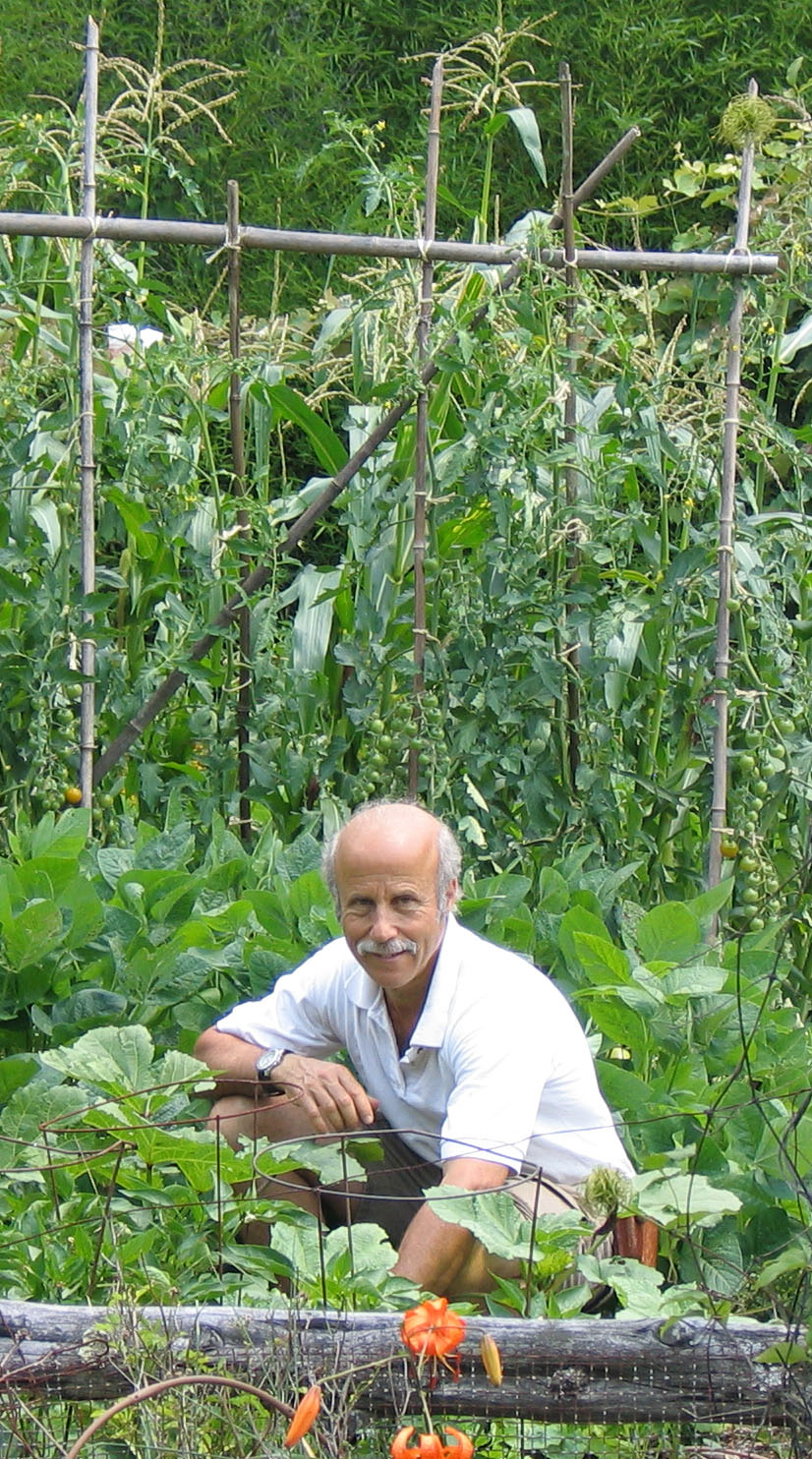
In my lectures, I try to meld together my enthusiasm for gardening along with my academic and practical experiences to give my audience information that they can, and will want to, take home and apply to their own “back forty.” Typically, my presentations involve slide photographs and last for about one hour, but I can accommodate other formats or time periods.
My lectures have been well received, with attendees commenting especially favorably on the clear organization of my material, the abundance and sometimes novelty of the information, and my humor.
I have included a list of some lectures that I offer. Feel free to use these descriptions, as well as the short biographical blurb on the “About” page, for press releases. My lectures are by no means limited to these topics, although my special interests and expertise in gardening involve fruit gardening, vegetable gardening, pruning, and anything concerning soil and compost.
A Sampling of Lecture Topics
Pruning Fruit Trees, Shrubs, and Vines
Correct and timely pruning is the key to keeping apples, peaches, grapes, blueberries, and other fruiting plants healthy and productive and bearing the tastiest fruits.
Learn the how and—importantly—the why of pruning these plants in their young, developing stage and then as they mature and bear fruits. We’ll also go over how to bring a neglected, old plant back to its former, luscious glory.
Multi-Dimensional Vegetable Gardening
Today’s gardens are smaller than those of years’ passed. With planning, though, today’s gardens can give get us a lot more bang for the buck in terms of space used and energy expended. Using 5 dimensions lets you grow a lot of vegetables in a small space. We’ll explore each of those dimensions and look at examples of how to make them work.
Blueberries: Reliable, Easy to Grow, Healthful, & Delicious
This lecture starts at the beginning, with the kinds and varieties of blueberries to order, and where to order them.
We’ll then move on to all-important soil preparation and ongoing soil care, planting, pruning, and harvest. A foray into bird issues ensures that you get to reap your harvest.
The end result may be an overabundance, so we’ll conclude with ways in which this problem is easily and happily contended with. You’ll leave this lecture with everything you need to know to be picking an abundance of blueberries within just a few years.
My Weedless Garden
This slide lecture introduces a novel way for caring for the soil, one that results in fewer weeds. Nurturing the ground from the top down, avoiding soil compaction, maintaining a soil cover, and pinpointing watering emulates rather than fights Mother Nature, keeping plants healthier and minimizing weed problems.
Learn how to apply this 4-part system to establish new plantings as well as to maintain existing plantings. The principles and practices are rooted in the latest agricultural research and are applicable to sustainable, small farm systems.
Growing Figs in Cold Climates
No need for the seductress fig to be restricted to mild climates. This lecture covers techniques for siting the tree for optimum ripening, getting figs through frigid winters, pruning, and of course, harvesting.
Luscious Landscaping – with Fruiting Trees, Shrubs, And Vines!
What could be more pleasant than picking luscious fruits from a plant that you also admire for its beauty? Meet some of the best trees, shrubs, and vines for this purpose, plants that require little maintenance yet provide stunning flowers in spring, color in autumn, and neat form in winter.
For landscaping, the ideal is a plant that also is low maintenance, being pest-resistant and requiring little or no pruning. Luscious landscaping is the way to beautify your grounds and to put (very) local, healthful, flavorful food on the table.
Fruits for Small Gardens
Gardens are smaller these days, but – as Europeans have known for centuries – a small garden is no impediment to fruit growing. Lowbush blueberries, currants, gooseberries, and super dwarf apples are among the fruits that visually and proportionally fit well into small gardens. This lecture will present the fruits and growing techniques needed to reap delectable rewards from spaces as small as a balcony to as “large” as a small suburban yard.
Fearless Pruning
A slide lecture to take the mystery out of pruning, so that lilacs, roses – all trees and shrubs, in fact – can be pruned to look their best and be in vibrant health. After going over the many benefits of pruning, we’ll take a look at the tools for the job and then – most important – discuss how plants respond to various types of pruning cuts. After that, we enter the “real world” with the how, why, and when of pruning various groups of plants.
Native Fruits
Most people, when they decide to grow fruits, plant apples or peaches, pears, cherries, and other familiar market fruits that mostly reflect this country’s traditionally European heritage. Consider native American fruits, which often are better adapted to withstand our pest and climate challenges, and look naturally at home in our landscapes. We’ll explore the beauty, the flavor, and the cultivation of American persimmon, pawpaw, beach plum, lingonberry, and a host of other native delectables, as well as blueberry — a relative newcomer to our market shelves.
The Science, Art, Fun, and Tasty Fruit of Esapliers
An espalier can yield very high quality fruit while making a decorative and edible covering for a fence or a wall – even creating the fence itself.
Learn which plants work best as espaliers and the theory and practice involved in bending and pruning branches to train and maintain the plants.
Special Pruning Techniques
A slide lecture about pleaching, pollarding, and creating standards and espaliers. These four pruning techniques each makes a bold statement in the landscape and each has a practical side as well.
We will cover the ornamental and practical uses of these techniques, the steps involved in creating them, and the plants appropriate for such techniques.
Backyard Composting
The how and the why of backyard composting, everything from designing an enclosure to what to add (and what not to add) to what can go wrong (and how to right it).
Don’t bother stuffing old tomato stalks, grass clippings, and leaves into plastic bags; just compost them! Also learn what free materials are available for composting.
Whether your interest is to produce a material that will make your garden soil fertile and fluffy or to use an environmentally sound way to deal with waste, this course will teach you all you need to know to make good compost.
No-Till Vegetables
No-till, when integrated with nurturing the ground from the top down, avoiding soil compaction, maintaining a soil cover, and pinpointing watering, grows healthy plants while minimizing weed problems. The principles and practices are rooted in the latest agricultural research. Discussion will cover gardens, farmdens, and small farms.
The Ornamental Vegetable Garden
No need to relegate the vegetable garden to the furthest corner of the yard. Using decorative fencing and gates, ornamental and fruiting shrubs, and other ornamentation integrates a vegetable garden to your home. And near a home is where it belongs; there, it gets more attention and more use.
Science & Gardening: Theory & Practice of Nourishing Plants Organically
We’ll begin with a look at the natural forms and transformations of nitrogen in the soil. Tapping into this natural, elegant system when nourishing your plants is efficient, environmentally sound, and is good for their health. Discussion will conclude with ideas for making best of this system whether on a garden or farm scale.
Compost Tea: Snake Oil or Plant Elixir
An objective look at compost tea, and also the broader issue of how scientific hypotheses are validated, or not. After going over the essentials – what is compost tea and its potential uses – we’ll move on to a discussion of aerated compost tea, as currently recommended in some circles. Theoretically, does it make sense, and, in practice, has it proved effective in the laboratory, in the greenhouse, in the field?
Know Your Family — Your Plant Family
Families matter, in the garden. They matter for plant health, for plant identification, and more. This presentation details how plant families came about, and why knowing something about the families is good for every gardener to know.
USDA Watercolors of 100+ Years Ago
Not a how-to presentation but a survey of over 7500 watercolors that the U.S. Department of Agriculture commissioned from 20 artists from 1886 to 1942. Today, these illustrations speak to the history of fruit growing in this country, even, in some cases, to our political history. The variety names have a quaintness lacking in contemporary varieties. Can you imagine a Nun’s Thigh pear or Red Democrat apple on a supermarket shelf today? My discussion of histories and horticulture will be carried along as you enjoy the many beautiful watercolors of fruit varieties that will be shown, each painting blending clarity and reality softened and given soul by the artist’s hand.